Message Us
Online
Request a call back

Savage Pest solutions
Covering Leicester, Leicestershire, Northampton and Warwickshire
Lines open
6am to 8pm ( 7 days a week)
07725 885238

Treatments start at £95
£20 Booking fee ( deducted from your treatment cost)
Rats
Rats in England: A Growing Urban Challenge
Rats are among the most widespread and resilient pests in England. The two main species found in this country are the Brown Rat (Rattus norvegicus), which is highly common, and the Black Rat (Rattus rattus), mostly restricted to port towns. Populations thrive in both urban and rural environments due to England's dense infrastructure, older sewage systems, and readily available food waste.
Why Rats Are Classified as Pests
Rats pose significant threats to public health, property, and local businesses.
1. Disease Transmission
-
Leptospirosis (Weil’s Disease): Spread through rat urine in water or soil. It can cause acute kidney injury in humans.
-
Salmonellosis: Contaminates food preparation surfaces via droppings and fur.
-
Rat-Bite Fever: Transmitted through scratches, bites, or contact with infected rodents.
2. Structural Damage
-
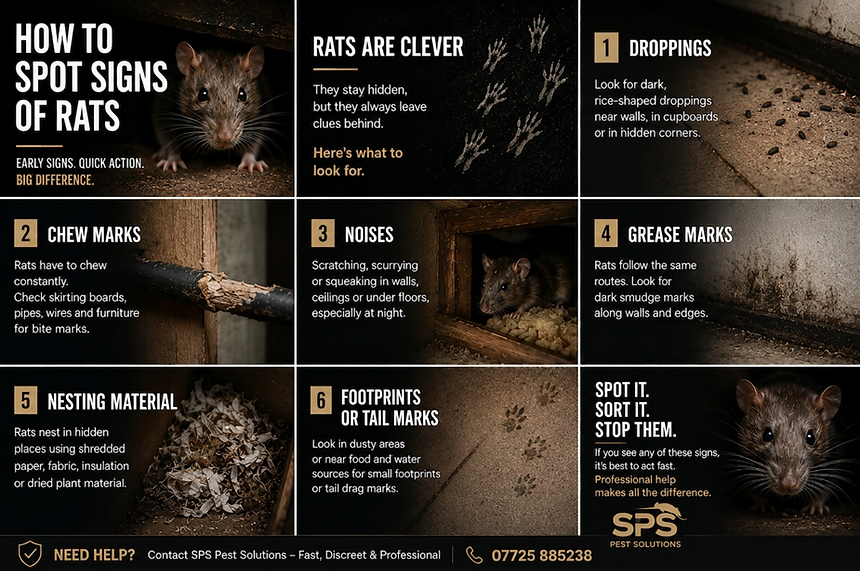
Incessant Gnawing: Rats must constantly chew to wear down their continuously growing incisors.
-
Fire Hazards: They frequently chew through electrical wiring, risking short circuits and fires.
-
Flooding Risk: Rats burrow into insulation, plastic water pipes, and gas lines.
3. Economic and Agricultural Impact
-
Food Spoilage: They contaminate significantly more food than they actually consume.
-
Stock Destruction: Packaging in warehouses and supermarkets is frequently ruined by chewing.
-
Livestock Threats: In rural areas, they steal animal feed and can transmit diseases to farm livestock.